

Seeing Asia with New Eyes through the Bonderman Singapore Summer Program
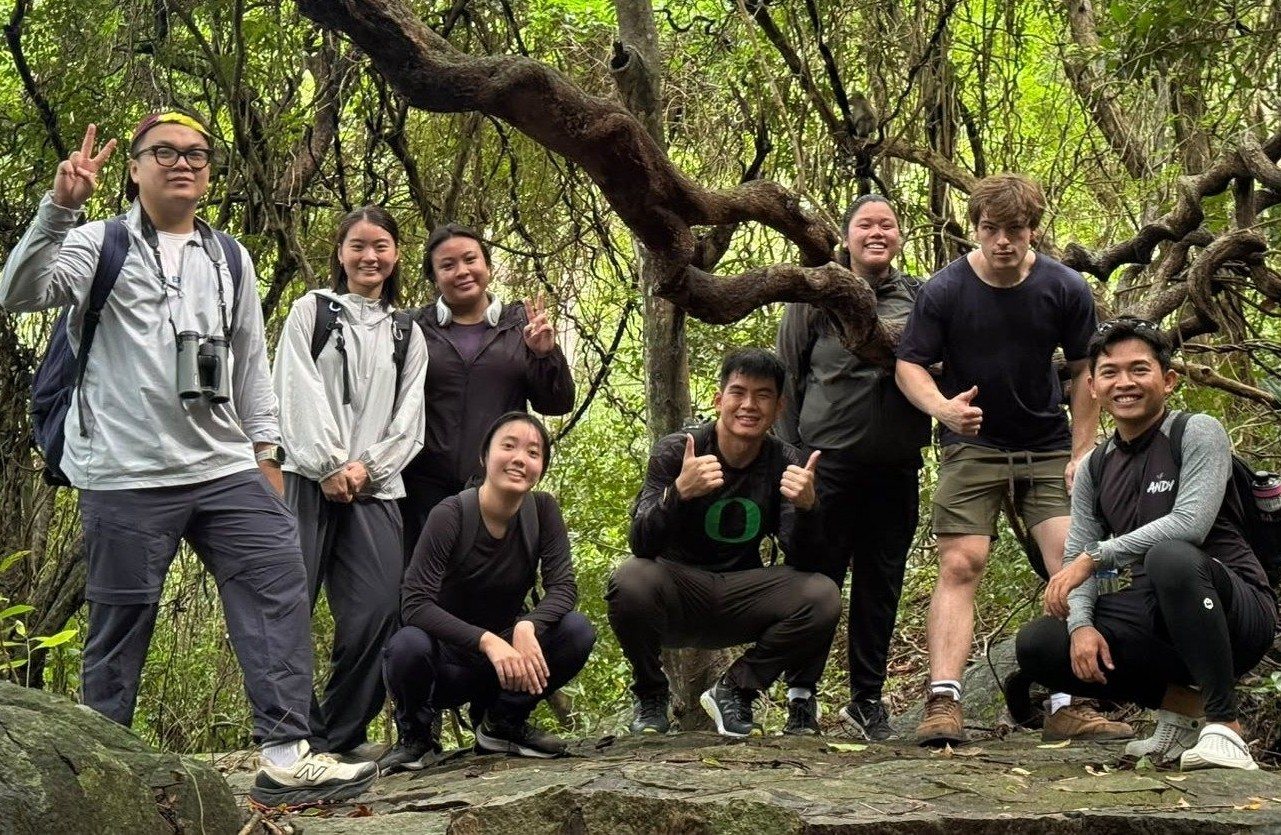
“Why do you go away? So that you can come back. So that you can see the place you came from with new eyes and extra colors.” — Terry Pratchett, A Hat Full of Sky
Terry Pratchett’s words in A Hat Full of Sky capture the promise of the Bonderman Singapore Summer Program (BSSP): to give University of Washington (UW) students the opportunity to travel far from home, immerse themselves in different cultures and return with a broader understanding of the world.
From 29 June to 6 August 2026, the inaugural programme brought three UW students to Asia for a six-week learning journey through Singapore and Vietnam. Combining academic study, industry visits and field-based conservation, the experience encouraged students to look beyond the familiar, engage openly with the people around them and consider how business, communities and the natural environment are connected.
An opportunity that arrived at the right time
For UW student Alexis Nguyen, the opportunity was both academically attractive and deeply personal.
As a Vietnamese American business student, she was drawn to a programme that would allow her to experience Singapore and Vietnam from perspectives beyond that of a visitor. She wanted to learn how businesses operate outside the United States, study alongside students from different backgrounds and understand how ideas introduced in Singapore could be applied through field research in Vietnam.
The timing was especially meaningful. As a senior preparing to graduate, Alexis had thought that her opportunity to study abroad had already passed.
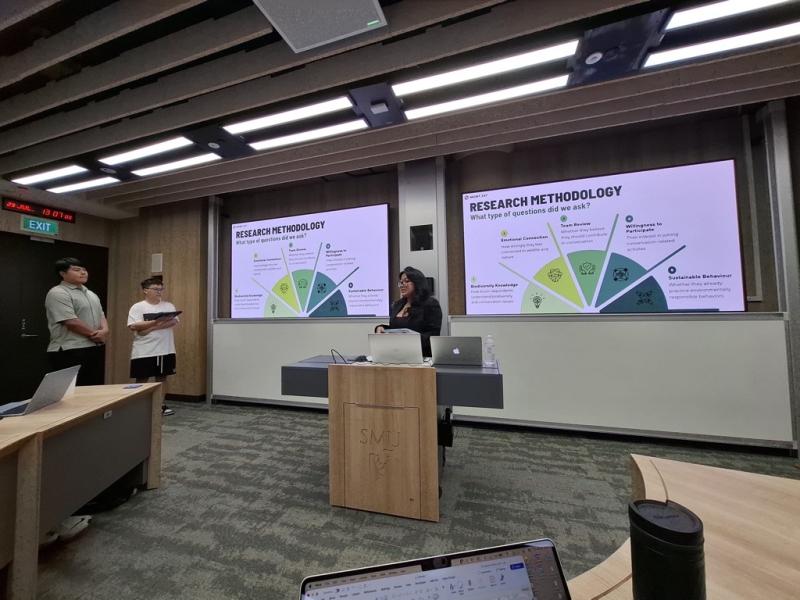
UW student Alexis Nguyen sharing a presentation at SMU.
“I came across this programme at a wonderful time,” she said. “It accepts students from all backgrounds and ages, and I am incredibly grateful for the opportunity to have participated.”
It was also Alexis’ first time travelling independently. The prospect of living and studying thousands of kilometres from home was exciting, but it required her to embrace unfamiliar routines, places and perspectives.
Learning alongside an international community
During the first four weeks, from 29 June to 24 July, the UW students joined SMU’s Global Summer Programme in Singapore. They took the credit-bearing course The Business of Fun: Developing Sustainable Tourism Destinations through Interdisciplinarity.
Through classroom discussions, case studies and industry visits, students explored how destinations create enjoyable and memorable visitor experiences while remaining socially and environmentally responsible. They examined the relationships among businesses, government agencies, local communities, suppliers and visitors, and considered how sustainability can be integrated into destination planning and management.
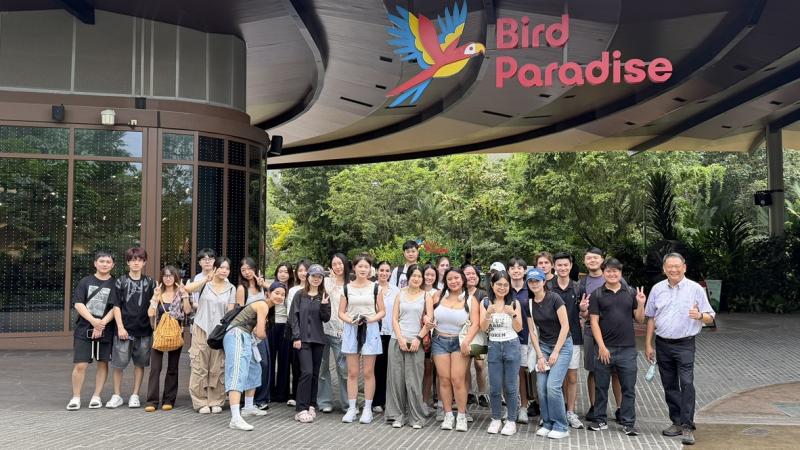
An industry visit to Bird Paradise in Singapore.
For Alexis, studying at SMU was about more than gaining business knowledge. It was an opportunity to learn within an international community and to understand how perspectives shaped in Singapore might differ from those she had encountered in the United States.
Living in Singapore also made everyday experiences part of the learning journey. Conversations with classmates, visits to local destinations and time spent exploring the city helped her understand the country beyond the classroom.
“Being able to study and live in Singapore for four weeks gave me a much deeper appreciation for how much there is to learn from simply being somewhere new,” Alexis reflected, “and taking the time to understand the people and environment around you.”
From business lessons to conservation in Vietnam
From 26 July to 6 August, the students continued to Vietnam for two weeks of immersive field learning. Their journey took them to Ho Chi Minh City, Can Gio, Con Dao and Cat Tien, where they encountered mangrove, marine, island, forest and wetland ecosystems.
The field programme introduced students to the importance of protecting biodiversity and maintaining healthy ecosystems. It also demonstrated that conservation cannot be separated from the people who live and work in these environments. Sustainable livelihoods, responsible tourism, community participation and environmental protection must support one another.
For Alexis, the visit to Con Dao was the most memorable part of the programme. After hiking and staying overnight near the nesting site, the students learnt about the full sea turtle conservation process — from the laying and protection of eggs to the hatching and release of baby turtles into the sea.
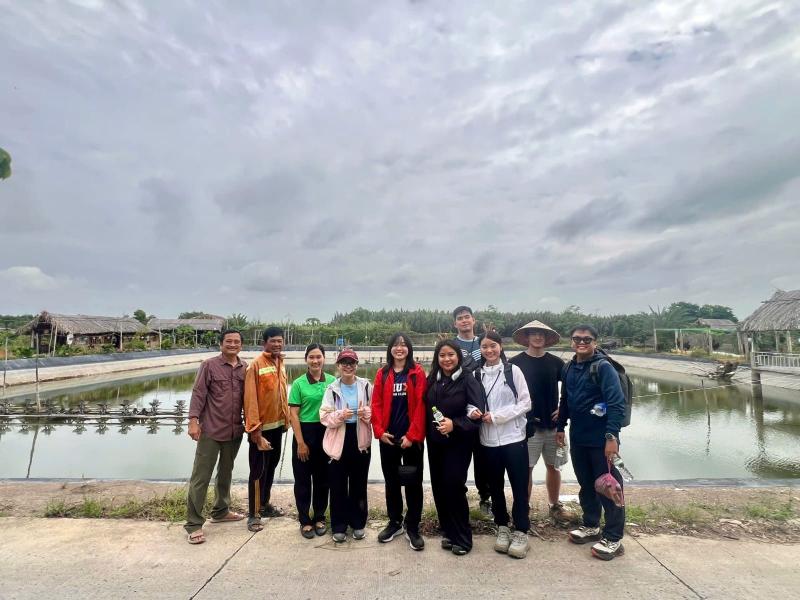
The inaugural cohort and programme team during the field-based conservation and community programme in Vietnam.
“My cohort members and I could really tell how significant the work these experts and volunteers were doing, as well as how much they truly cared about these turtles,” she said.
Seeing this work first-hand made the importance of conservation tangible. It prompted Alexis to consider how seemingly small decisions can affect ecosystems and the communities that depend upon them.
Connecting with culture and heritage
The Vietnam experience also held particular significance for Alexis because it allowed her to connect with her Vietnamese heritage in a new way.
Although the country felt close to home culturally, the programme reminded her that familiarity does not mean there is nothing more to discover. By listening to local guides, learning about conservation practices and spending time in different communities, she developed a more nuanced appreciation of Vietnam’s people, culture and natural environment.
The relationships formed within the cohort were equally important. Late-night conversations, market visits and shared activities helped turn a study programme into a close-knit cross-cultural community.
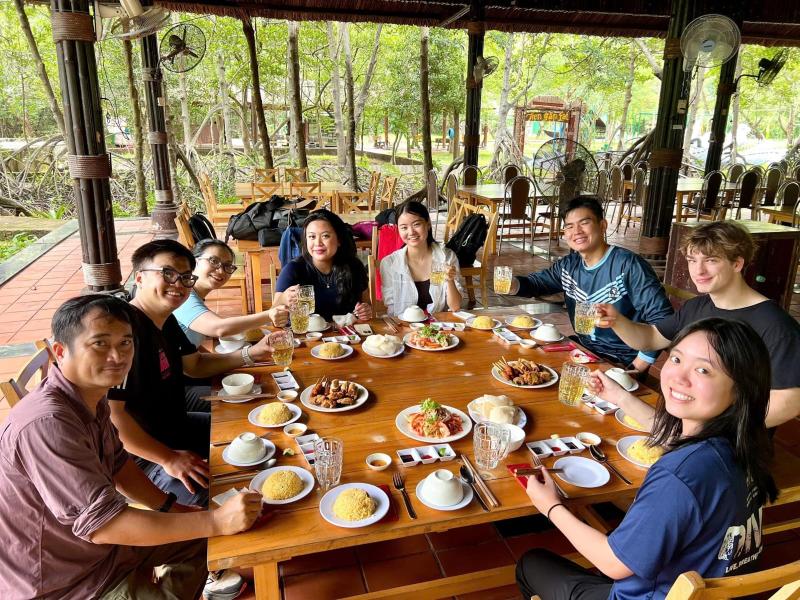
Cultural exchange through food during a group lunch at Vam Sat Ecopark.
I left with a much greater appreciation for the people I met, the experiences I had, and the ways that travelling and learning alongside others can change your perspective,” Alexis said.
She returned home more confident about stepping beyond her comfort zone and more willing to engage with perspectives different from her own. She also hopes to be more intentional in her daily life — listening, asking questions and seeking to understand before making assumptions.
Keeping David Bonderman’s spirit alive
The BSSP was inspired by the life and influence of David Bonderman (1942–2024), Co-Founder of TPG and a University of Washington alumnus.
A pioneer in private equity, legal scholar, conservationist, and advocate for cross-cultural understanding, Mr Bonderman made a meaningful and far-reaching impact across industries and borders. His life reflected a willingness to push boundaries, give back to society and protect the natural environment for future generations.
In honour of his legacy, friends from around the world came together to establish BSSP through their generous contributions. The initiative aims to eventually bring five UW undergraduates to Asia annually for a six-week immersion through SMU’s Global Summer Programme.
It is a tribute expressed not only through remembrance, but through meaningful action. By enabling students to encounter unfamiliar cultures, build relationships across borders and develop a deeper appreciation of conservation, the programme carries forward the values Mr Bonderman championed.
For future participants, Alexis’ advice is to approach the experience with curiosity and an open mind.
“Take the time to get to know your cohort and the many other students at SMU, ask questions, learn from the people you meet, and really immerse yourself in the places you visit instead of just seeing them as another destination.”
For Alexis, what began as an unexpected final opportunity to study abroad became one of the defining experiences of her university journey. She returned with lasting friendships, greater confidence and a renewed willingness to keep learning—seeing both the world and her own heritage with new eyes.
For more information about The Bonderman Singapore Summer Program, visit giving.smu.edu.sg/campaigns/bonderman-singapore-summer-program


